


Heads up: this will contain spoilers for “Pikmin” and “Pikmin 2,” with minor spoilers for “Pikmin 3.”
I was introduced to “Pikmin” later in life. I was in high school and dating a guy who absolutely loved the series. It seemed interesting, so he set up a Wii for me to start my journey as Olimar on a mysterious and dangerous planet.
Turns out, this was the most fun game I had played in a while.
Now, don’t get me wrong. It has some frustrating controls—the slightest mistimed whistle could decimate your entire Pikmin army—but I was mesmerized by the game’s urgent plot, level design, sound design and difficulty.
Having played “Pikmin 2” and “Pikmin 3,” I can confidently state that “Pikmin” is my favorite entry in the main series. Just ignore “Pikmin 4” gathering dust on my backlog shelf for this review, okay?
For those unaware, “Pikmin” was released on the Nintendo GameCube in 2001, shortly after the console debuted. With the ability to have up to 100 small Pikmin on the screen performing different tasks at the same time, “Pikmin” was a revolutionary success worldwide, leading to several sequels in later years.
In the game, you play as Captain Olimar, a vaguely humanoid being from the planet Hocotate, who crash-lands on a bizarre, undiscovered planet. After finding out the planet’s atmosphere is filled with poisonous oxygen, Olimar determines that he has 30 days of air remaining to find the 30 pieces needed to repair his spaceship. Only one part per day? That can’t be so hard, right?
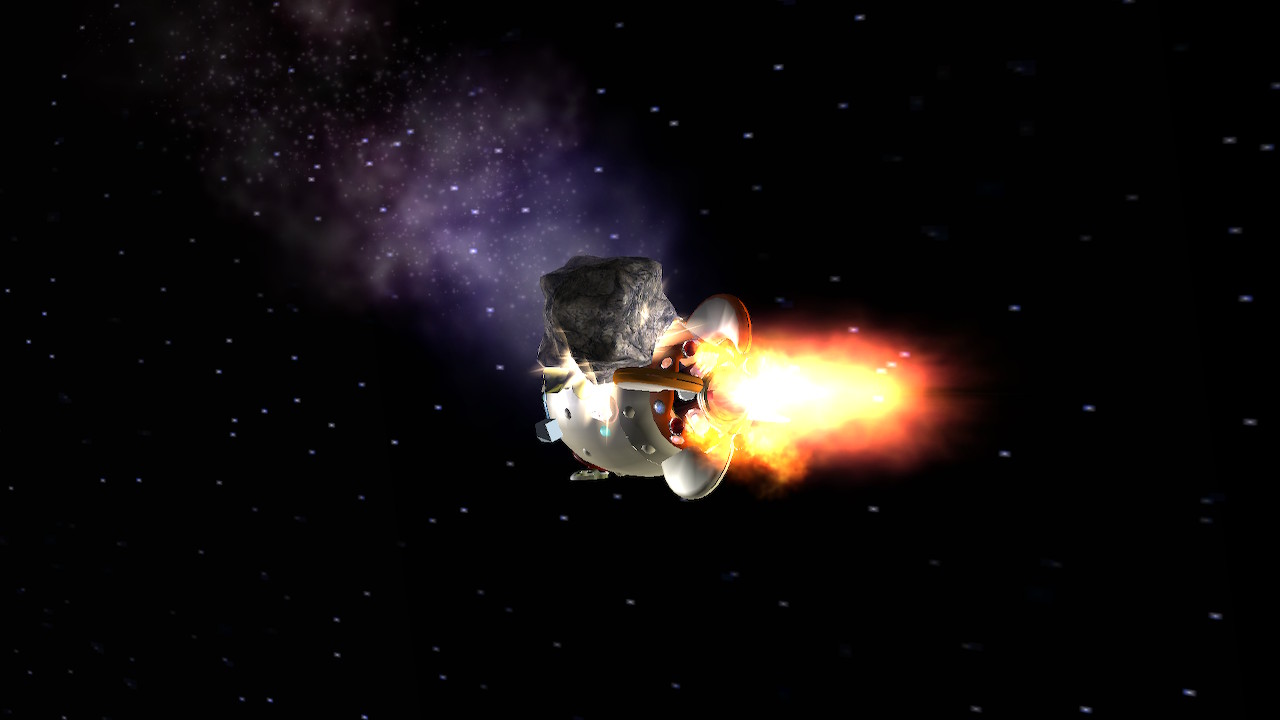
Opening cutscene showing Olimar’s collision with a meteor before crashing on the unknown planet.
After that terrifying discovery, Olimar notices small, plant-like creatures on the brink of extinction. Once he helps them rebuild their population, he realizes that these creatures—the titular Pikmin—are incredibly capable fighters and gatherers, only needing a little direction. And so, the gameplay loop was born: direct the Pikmin using Olimar’s whistle (and throwing arm) to attack enemies, and use the Pikmin to carry the missing parts back to the spaceship.
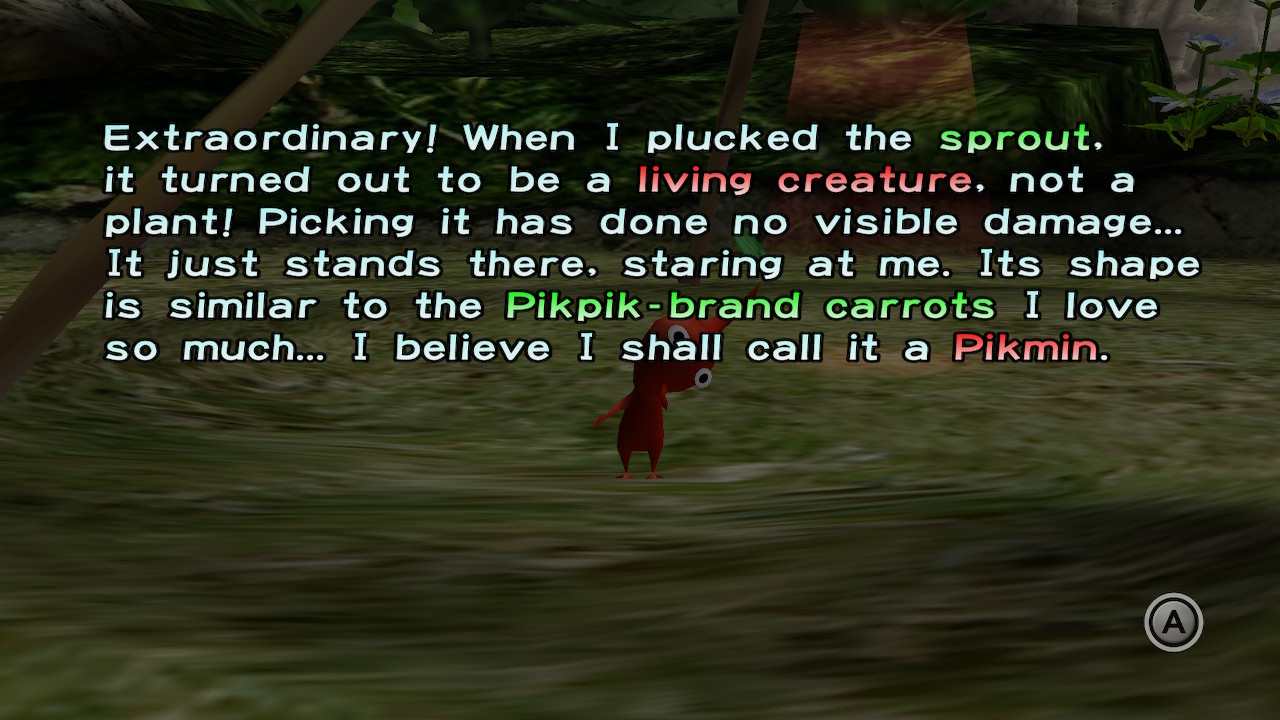
Olimar’s thoughts after discovering the Pikmin.
Right off the bat, this intense opening immediately sets the stakes for the rest of the game. Notably, “Pikmin” is a real-time strategy game, with each day being roughly 13 minutes in real life. You are now faced with a timer slowly ticking down. Every day you waste exploring, every day you don’t find a ship part, every time you lose a Pikmin, you are letting Olimar inch closer to death. It is extremely stressful, but I’d argue that resource management and strategy games need to maintain a constant stressor to keep players engaged.
This sense of urgency is something the other “Pikmin” games lack. Both “Pikmin 2” and “Pikmin 3” keep the daylight system, but there is no underlying threat keeping the player moving forward. “Pikmin 2” at least (somewhat) makes up for the lack of urgency with its sheer difficulty, but the player would not feel anxious about taking a full day to rebuild their Pikmin numbers in “Pikmin 2” as they would in “Pikmin.”
After the tutorial, the game allows you to choose from two different locations to explore, with three more opening up as you further repair the spaceship. There are five areas in total, and all are vastly different in design. The ship parts are scattered throughout these areas: some hidden behind breakable barriers, some inside miniboss-like enemies, and others behind puzzles requiring certain Pikmin types.
Speaking of Pikmin types, different colored Pikmin have varying strengths and weaknesses. In the first game, there are three colors: red, yellow, and blue, unlocked in that order. Red Pikmin have a resistance to fire and are powerful fighters, but they cannot survive in water.
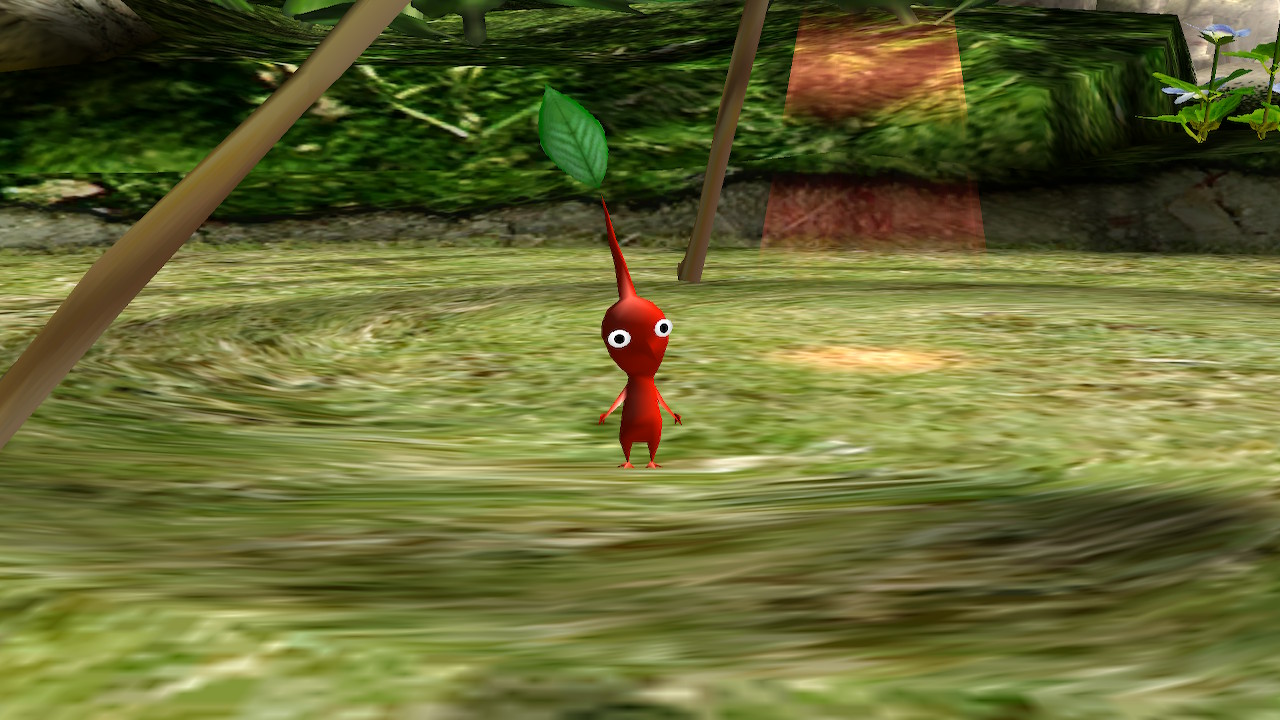
Yellow Pikmin are generally seen as the most useless in the first game, as they are weak in combat and cannot swim. However, they are more aerodynamic and can be thrown farther than normal Pikmin, and they can pick up bomb rocks, which are used to destroy barriers and the occasional enemy.
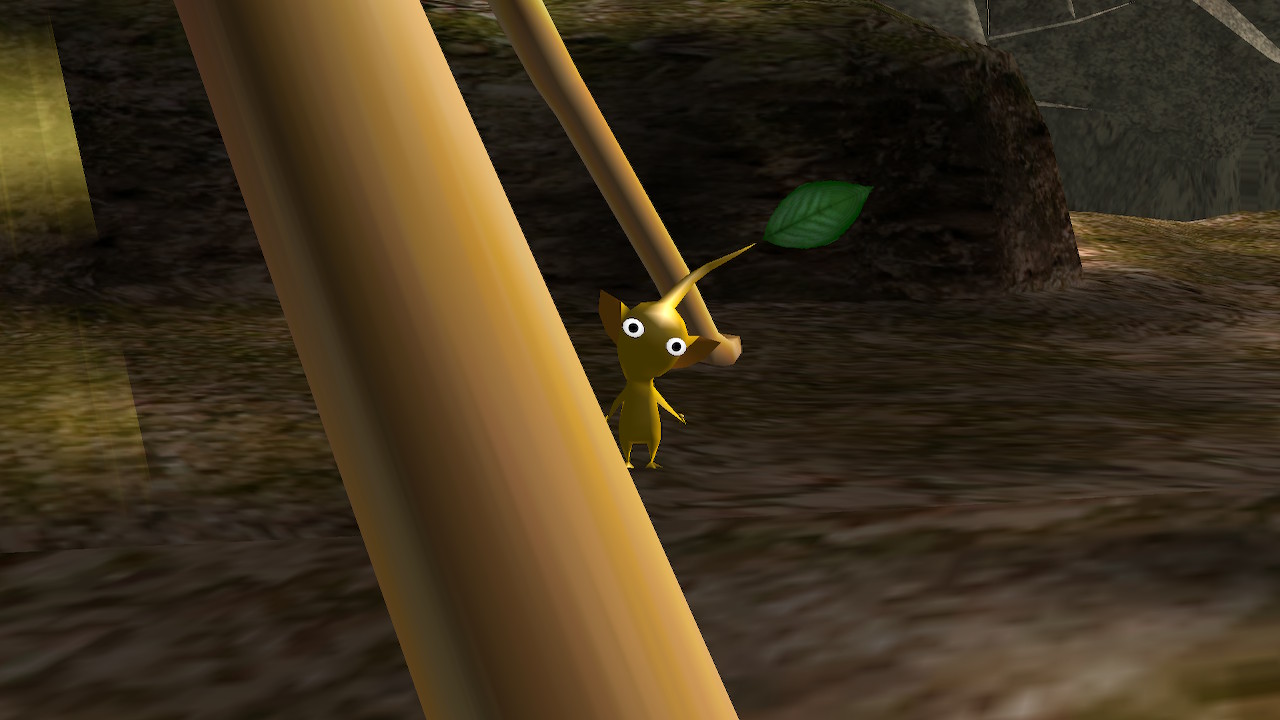
Finally, blue Pikmin can survive in water, but do not possess the same combat capabilities as reds or high-flying nature of yellows.
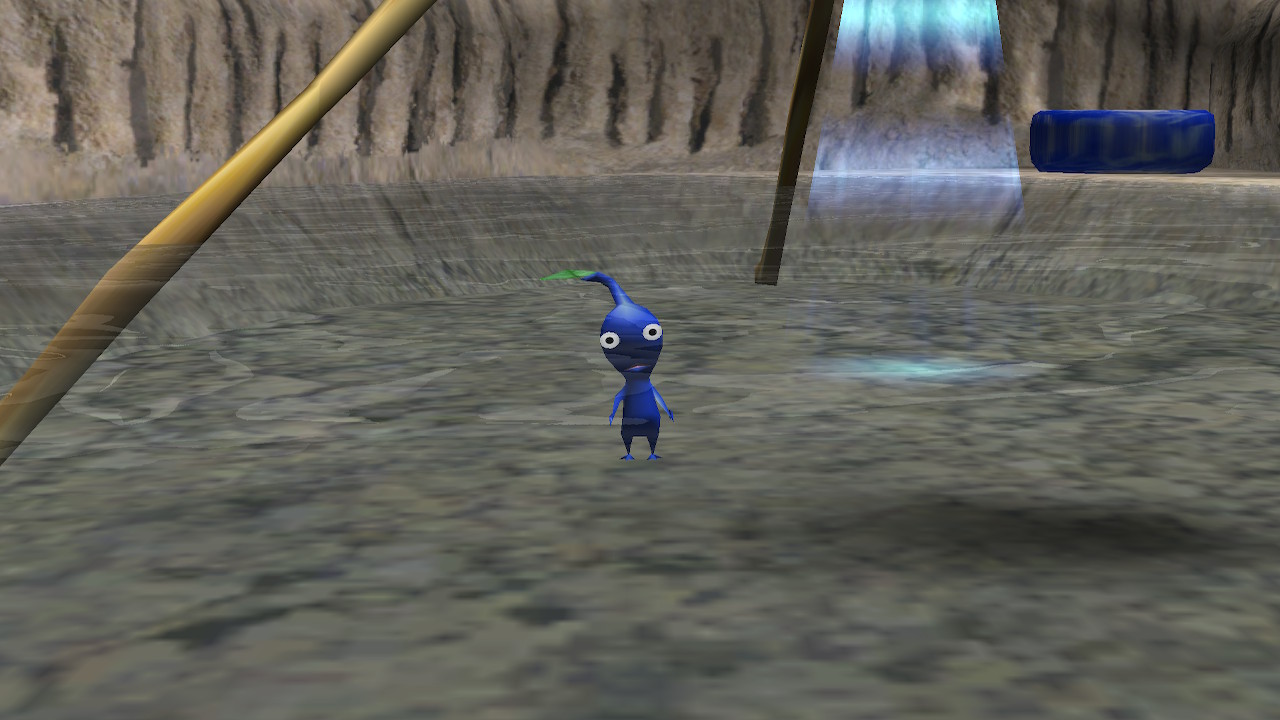
All Pikmin types can help break down barriers and carry ship parts, and all types are equally vulnerable to death by chomping, stomping or romping.
This brings me to another highlight in the first game: its level design. Each region allows for free exploration but expertly locks harder enemies behind barriers requiring new Pikmin types to break. Hostile creatures are difficult in combat but generally have well-telegraphed openings and vulnerabilities, letting you organically discover the best ways to defeat them.
Ship parts on the map are placed with care, leaving some easier to retrieve and others requiring more difficult maneuvers to bring back to the spacecraft. Puzzles are rewarding, allowing players to think outside the box and use different Pikmins’ strengths. This is excellent game design and creates an environment that is challenging, but not overly difficult.
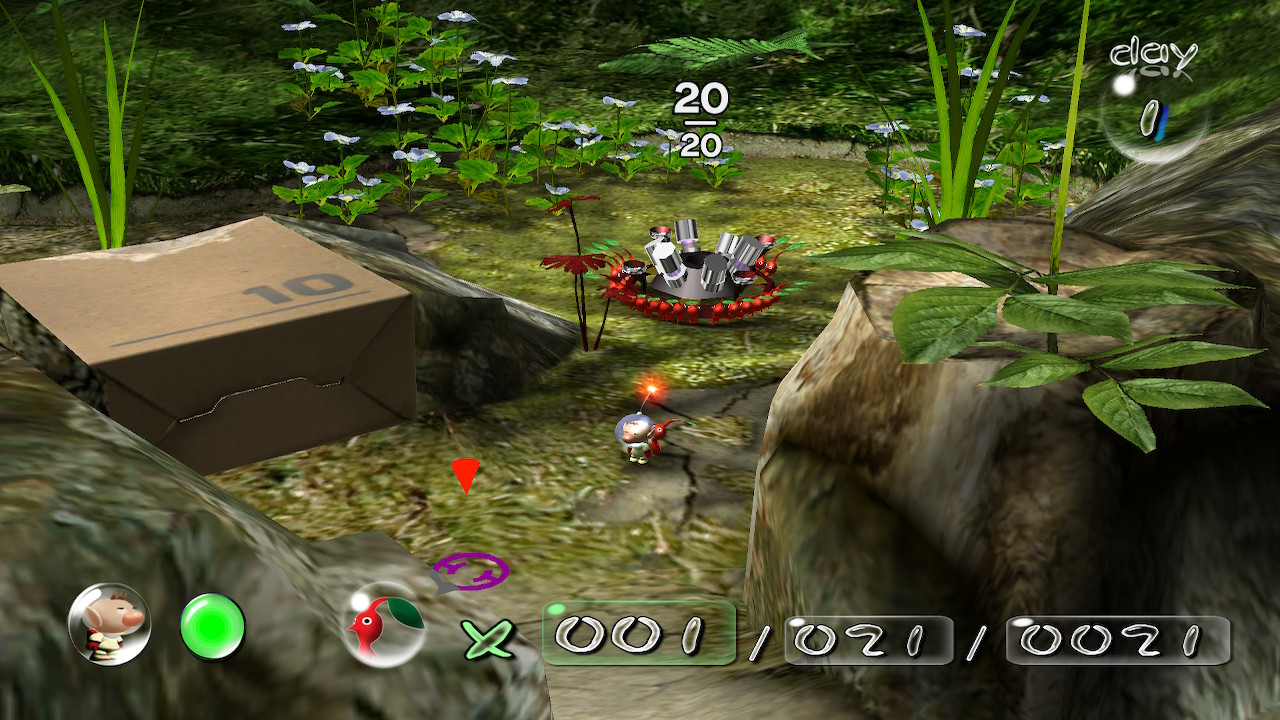
Pikmin carrying a ship part.
And after each day passes, you are rewarded with a brief overview of your day, featuring the fluctuations in your Pikmin numbers (which can be quite a shock after a particularly devastating fight) and Olimar’s journal entries.
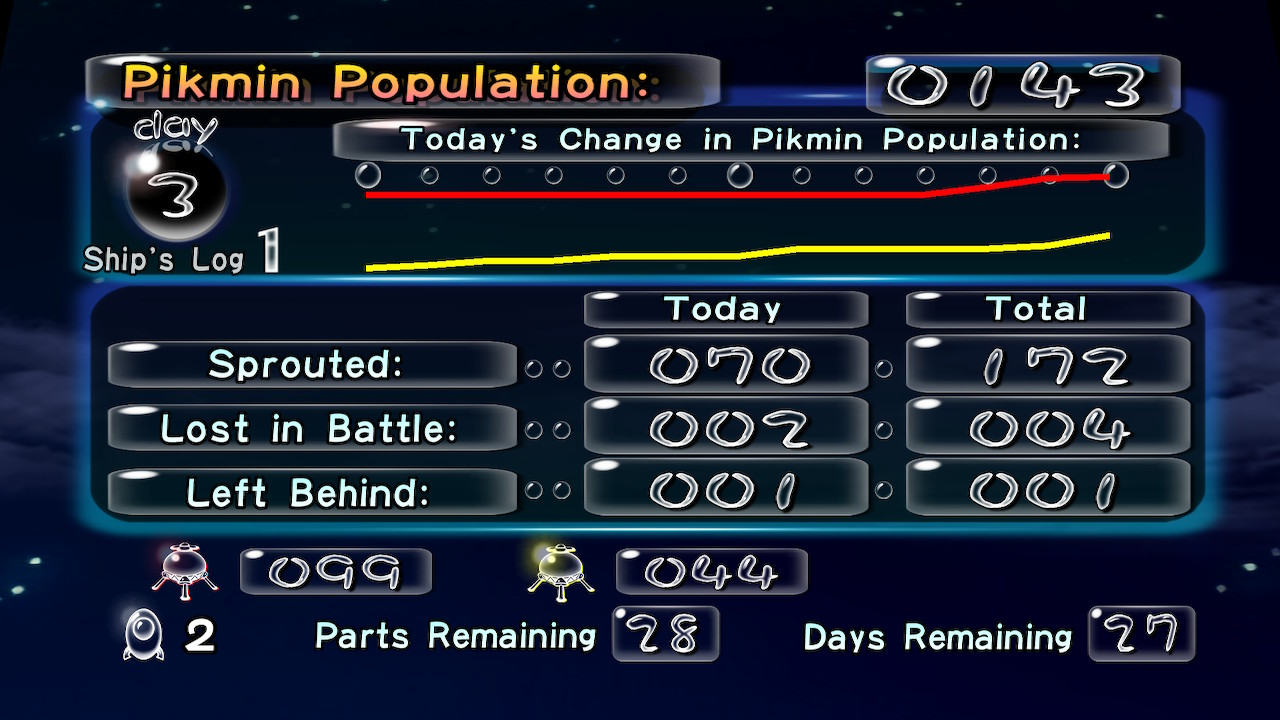
Though some of his journaling focuses on endearing us to his plight, these brief notes are also brilliantly hidden game design. Sometimes, Olimar reflects on an observation made during the day, like after learning that the Pikmins’ leaves can become flowers if left in the ground for a while or after consuming nectar scattered around the map. He notes that flowered Pikmin are generally faster and stronger than Pikmin with leaves. I love these journal entries because they provide some respite and reflection after the stress of the day, while also developing Olimar a little as a protagonist.
After the first few days, you realize you are on your own. You must search these regions for parts each day to ensure Olimar’s survival. One aspect of “Pikmin” that I love is how lonely it can feel. There isn’t a lot of dialogue, only the occasional interruption from Olimar about a new, Pikmin-related discovery and his musings in his journal. The loneliness present in the game helps to ground yourself in Olimar’s reality.
I also want to highlight the game’s sound design. “Pikmin” features some great music that dynamically changes depending on what is happening in the game. Each location has a background track, featuring added percussion during combat and music box-like soundfonts when the day is about to end. Notably, the background tracks are all pretty ethereal-sounding, with droning basslines and loose melodies overtop, which fit the theme of exploring an unknown planet.
The sound design is also great, featuring otherworldly cries from creatures, satisfying musical cues after achievements, and, of course, the Pikmin’s adorable little noises. I would be remiss if I left out the devastating death noise the Pikmin make. These simple sound effects manage to convey exactly what players need to know and further engage us in the world.
Eventually, you’ll reach the end of your 30 days (or collect all the parts), and it’s time to find out if Olimar escapes. One notable detail about the ship parts that the game doesn’t explicitly tell you is that you don’t actually need every part to repair the ship. I love this detail because, not only is it realistic, but you can figure it out if you think more critically about the parts you’re collecting. I mean, does Olimar really need his massage chair? Or his inner tube for “swimming in space?”
Depending on how many parts you collected, you are rewarded with three different endings: one where Olimar lives but the Pikmin struggle to survive without him (only required parts collected), one where Olimar’s ship can’t take off and he becomes an odd Pikmin hybrid (not enough parts collected), and one where Olimar escapes and the Pikmin can take care of themselves on the planet (all parts collected).
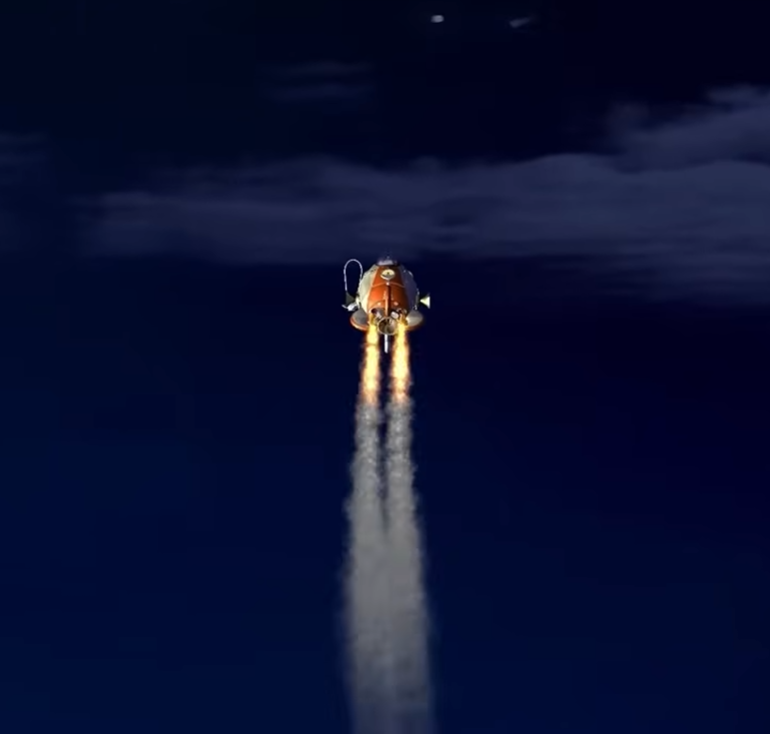
Olimar’s ship taking off. Credit: BeardBear
Because “Pikmin 2” exists, the canon ending is one where Olimar escapes with all the parts, but I enjoy the fact that it is possible to lose. The game is short enough that, if you want to try again, you can do so easily. And, more than likely, you’ll succeed on your second try. Trust me—I have experience with this.
Now, even though I like “Pikmin” a little more than its sequels, it definitely has its faults. For one, the Pikmin AI can be janky, causing Pikmin to suddenly run towards an enemy (or fall off a ledge into water) and get them killed. Whenever I play, I always have a couple of frustrating moments where these issues occur and kill many of my Pikmin.
The controls can also be frustrating. Sometimes I feel like I am fighting with the camera, and sometimes it feels like my whistle doesn’t work. These moments compound with the Pikmin AI issues and can cause some pretty devastating consequences (i.e. losing your Pikmin).
Though I still prefer “Pikmin,” I did thoroughly enjoy “Pikmin 2.” The sequel significantly improved Pikmin AI and controls, but also added many features to the original concept that I would be remiss in leaving out in this article.
I appreciate the way “Pikmin 2” improved yellow Pikmin. “Pikmin 2” added electricity as a threat (similar to how fire and water were used in “Pikmin”) and made yellow Pikmin immune to it. This simple change helped buff yellows from their pretty useless state in the first game.
“Pikmin 2” also added caves scattered throughout the regions. These caves serve as great tests of strategy because you are only allowed to use the Pikmin you bring inside. If you leave the cave, you must start again on the first floor. This addition is a fun, creative way to introduce new enemies, bosses and Pikmin types to the original concept.
There is also a lot more Pikmin content in “Pikmin 2.” “Pikmin,” in theory, could be beaten in around 7 hours, which is pretty short. “Pikmin 2,” on the other hand, takes twice that amount of time to beat the main story, and double that to fully complete it.
“Pikmin 3” is the weakest game in the series, in my opinion. Though it looks very pretty, many of the gameplay challenges I loved in the first two games were either removed or weakened. For example, electricity no longer kills vulnerable Pikmin—it just stuns them. There is also a lot more emphasis put on dialogue between characters, which might be fine for some, but, personally, I am not playing Pikmin for dialogue, character development and lore. Though there are some neat moments and interesting challenges, “Pikmin 3” is my least favorite game in the series.
It is amusing to me that each person, depending on their tastes in games, would end up having a different favorite “Pikmin” game. For people who like a compelling narrative, little dialogue, and fun strategy, the original “Pikmin” would be my suggestion. For those who seek challenging gauntlets and unlimited exploration, “Pikmin 2” is the clear choice. And, though we did not discuss it much, for people who want a more relaxed strategy game with lots of character interactions, “Pikmin 3” would be a great fit.
Clearly, I fit in the “less talking, more narrative and strategy” category. I truly love the “Pikmin” series, but I will always have a soft spot for the first game. It is strategically interesting, challenging, fun and frustratingly stressful at times, making it an excellent game all around.
And, yes, I will get to “Pikmin 4…”
Eventually.









It is astounding how diverse the four Pikmin games are (excluding Hey! Pikmin and Pikmin Bloom). Pikmin 1 is definitely the best as an isolated game. You and your Pikmin alone in this foreign planet and trying to find the parts to survive with a time limit. And Pikmin 2 has cave diving, which has its own challenges for collecting treasures. I would say, in concept of gameplay, 3 is a sequel to 1 and 4 is a sequel to 2, with collecting, surviving, and which ones have caves and which one don’t. And I think that’s solely looking at their main story, because Pikmin 3 as a whole, is a complete package with a good single player, the only good co-op, and additional missions, achievements, and battle mode. I would suggest checking it out if you haven’t, it does forces you to adopt real time strategy in shorter but more significant bursts.
Pikmin is still in a unique bubble, as it’s definitely the only title that is short that is worth trying to see if you can do better.