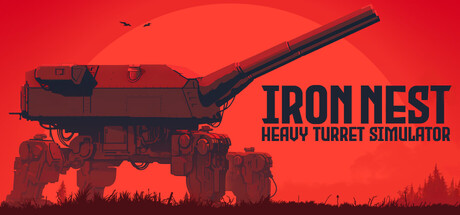
Whirrrr… clank… boom. A pair of 800-millimeter artillery cannons fire in sync, turning a village into a crater. This is a new four-legged Spanish machine the size of a warehouse, known to the world as the Iron Nest.
A turret simulator game, Iron Nest is set in an alternate-history 1928 where Spain is torn in half by civil war. The authoritarian Castille regime fights hard against pro-republic rebels, and the player takes on a major role in quelling this revolution. Equipped with a clipboard and pocket watch, you’ll be tasked with calculating fire missions on a huge tactical map, putting numbers into an onboard calculator, loading, aiming, priming, and firing the guns, and finally making the perfect cup of coffee when your mission is complete.
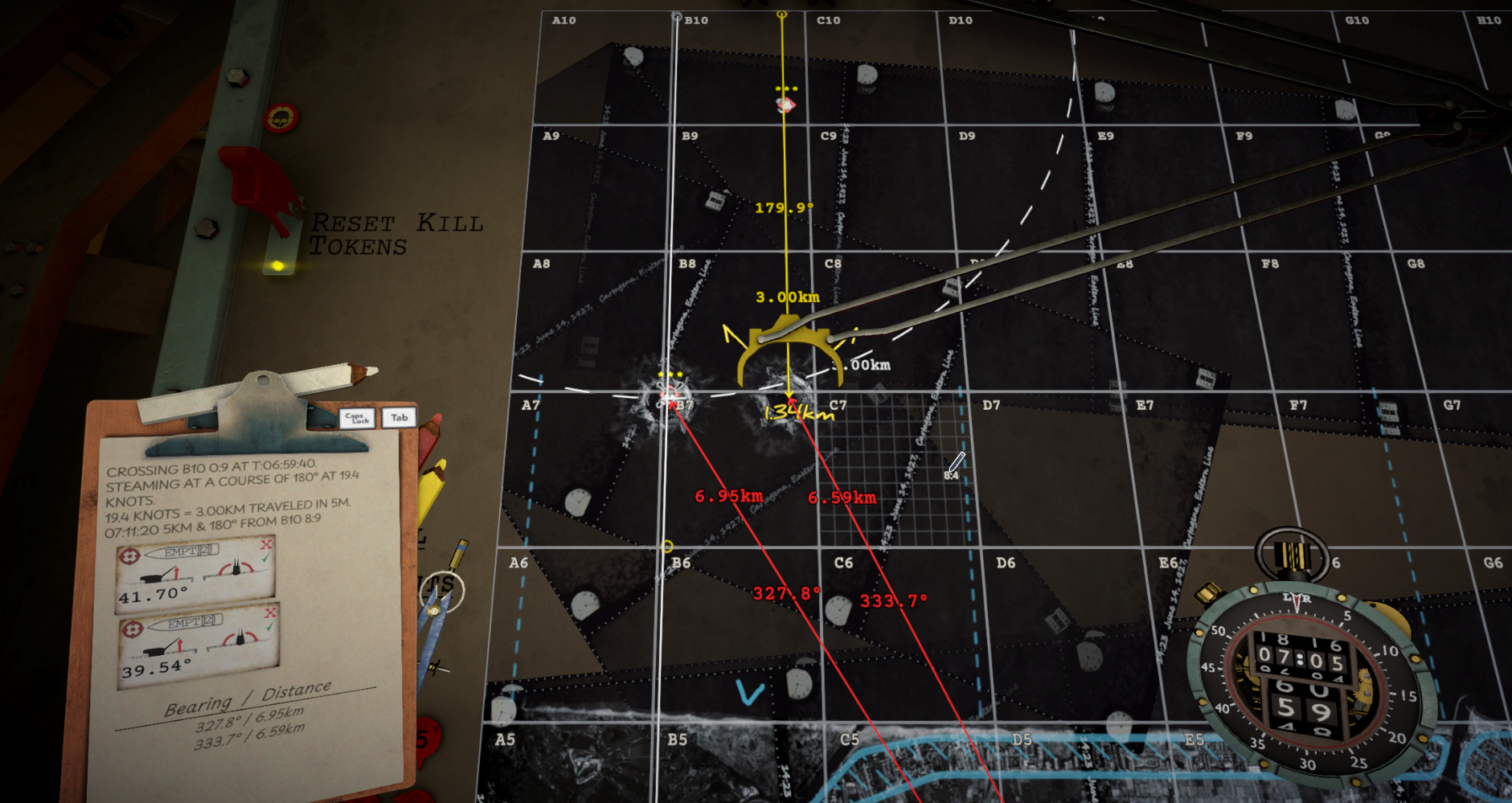
The core gameplay loop consists of buying shells, triangulating your targets, retrieving an elevation from the calculator, aiming, and finally firing the Iron Nest. Every step has a unique mechanical interface and interactive wheels or buttons that actually move objects in the game and can shake your camera, which lends every action a sense of real, physical weight.
In addition to great visual cues, the soundscape is designed to bring you in even further. Every gear turn, mechanical arm, rail system, steam valve, pencil scratch, and even your watch have unique noises. And of course, the cannons are literally deafening. I found the combination of the game’s constant mechanical motions and sounds to be quite immersive, particularly in high-stakes moments. Few non-horror games have made me as tense as listening to my watch tick down the seconds as a shell slowly approaches mobile enemies, praying I didn’t make a mistake somewhere in the long process between reading the command and firing the gun.
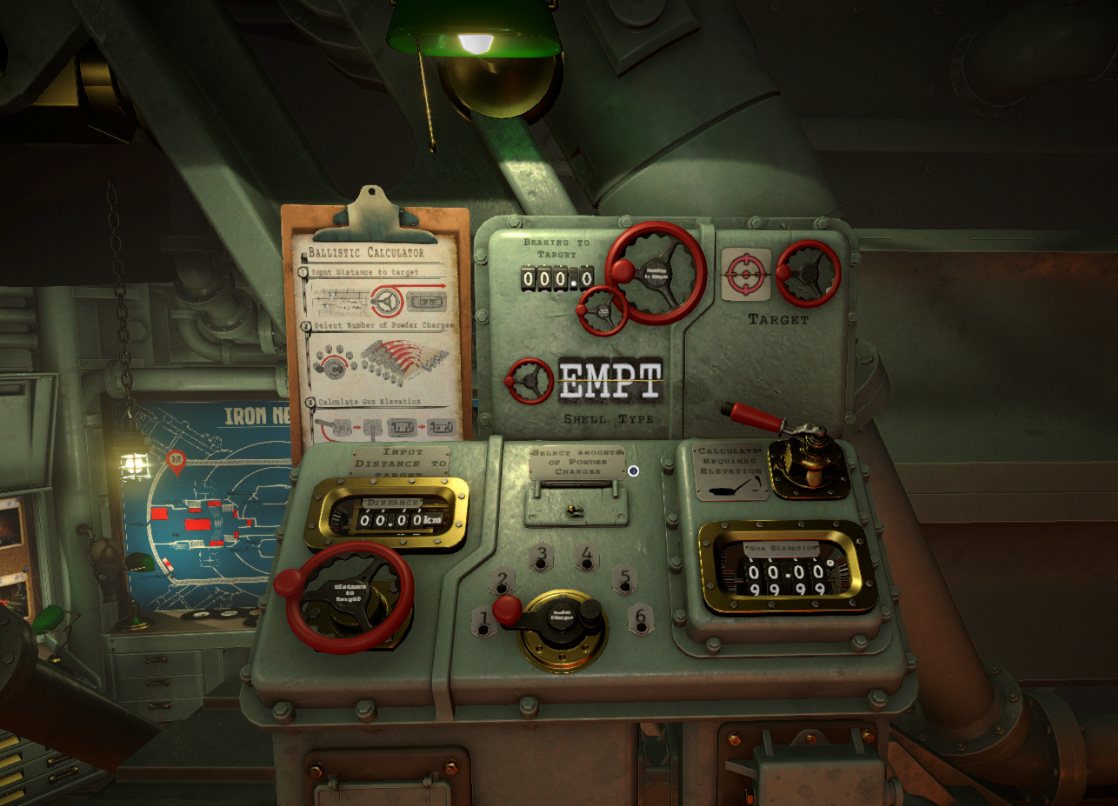
But, unfortunately, that is the entire game. The tedious process of loading and directing the Iron Nest feels immensely powerful (and appropriately so) at the start of the game, but after my hundredth shot I found myself wishing the guns weren’t quite so big.
Just before the game’s release, I remember one angry commenter in the game’s Discord server describing it as a “Fisher Price toy simulator,” in which the whole experience could be boiled down to “big red buttons and flashing lights.” While I don’t disagree, that’s actually why I find the game appealing. The first few missions filled me with constant amazement at the awesome power of the cannons, even if it did get old. Fortunately, though, the missions get much more complex as more mechanics are added.
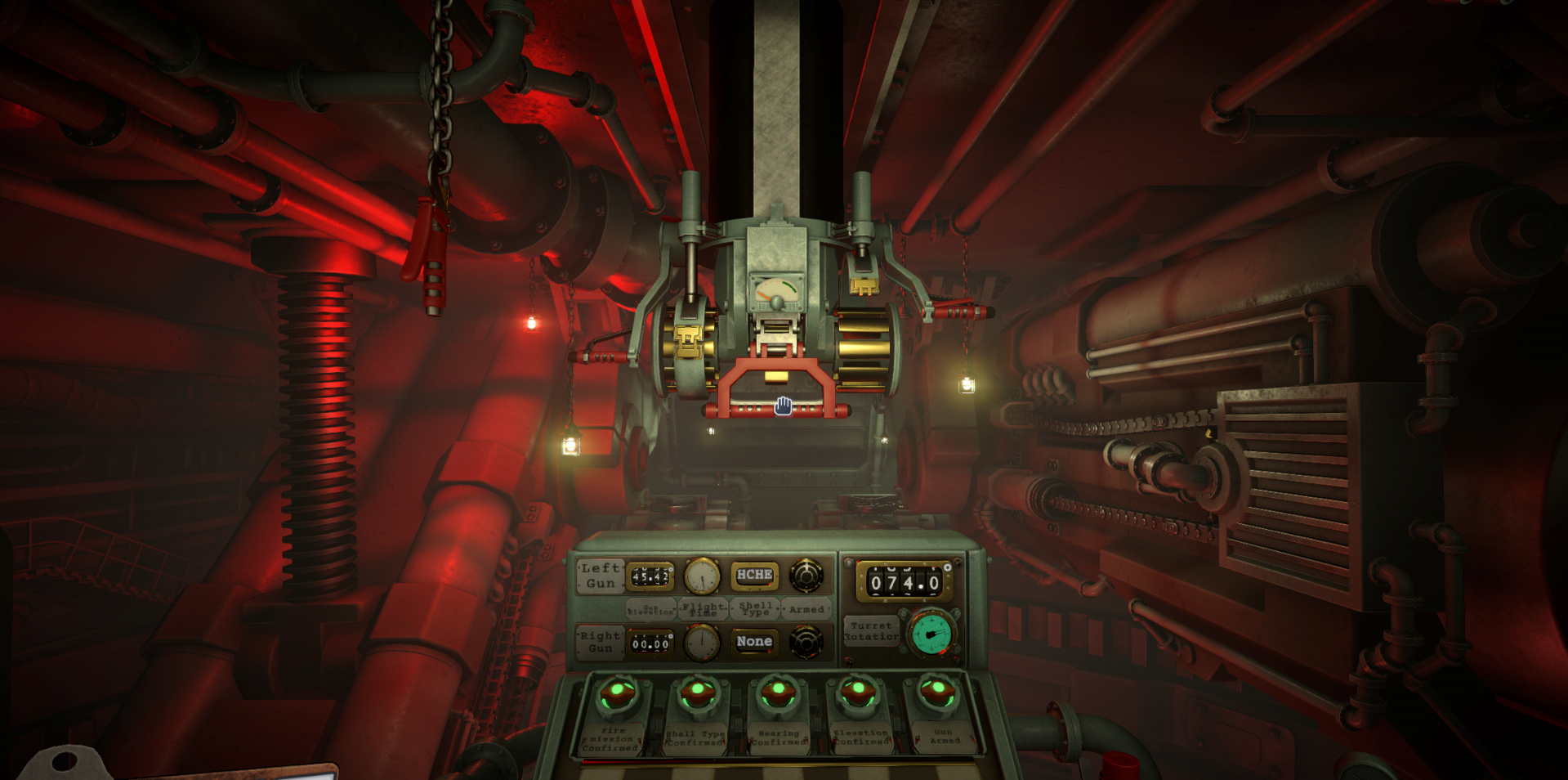
The “Iron Road” mission introduces a new challenge: timing. Your first command is to destroy a train, and you’re given three points the train will pass through, each with a set time. If you are off by just a few seconds, you miss the train entirely and must completely recalculate, reorient and reload the Iron Nest in time to hit the next checkpoint. As described before, the process of resetting the machine is no small task, but now the tedious process becomes a cleverly hidden way to raise the difficulty.
If you fail the first checkpoint, you’re put on the back foot for the rest of the mission. This gives each shot a sense of weight far beyond what you can see and hear—it adds weight you can feel. A number that’s only a few decimal points off, a miscalculated powder charge, the wrong shell, wrong bearing, wrong elevation, wrong magazine, wrong time—suddenly every step in the process becomes a gate that could make or break the mission, because when seconds count, there isn’t time to wait for the guns to reset.
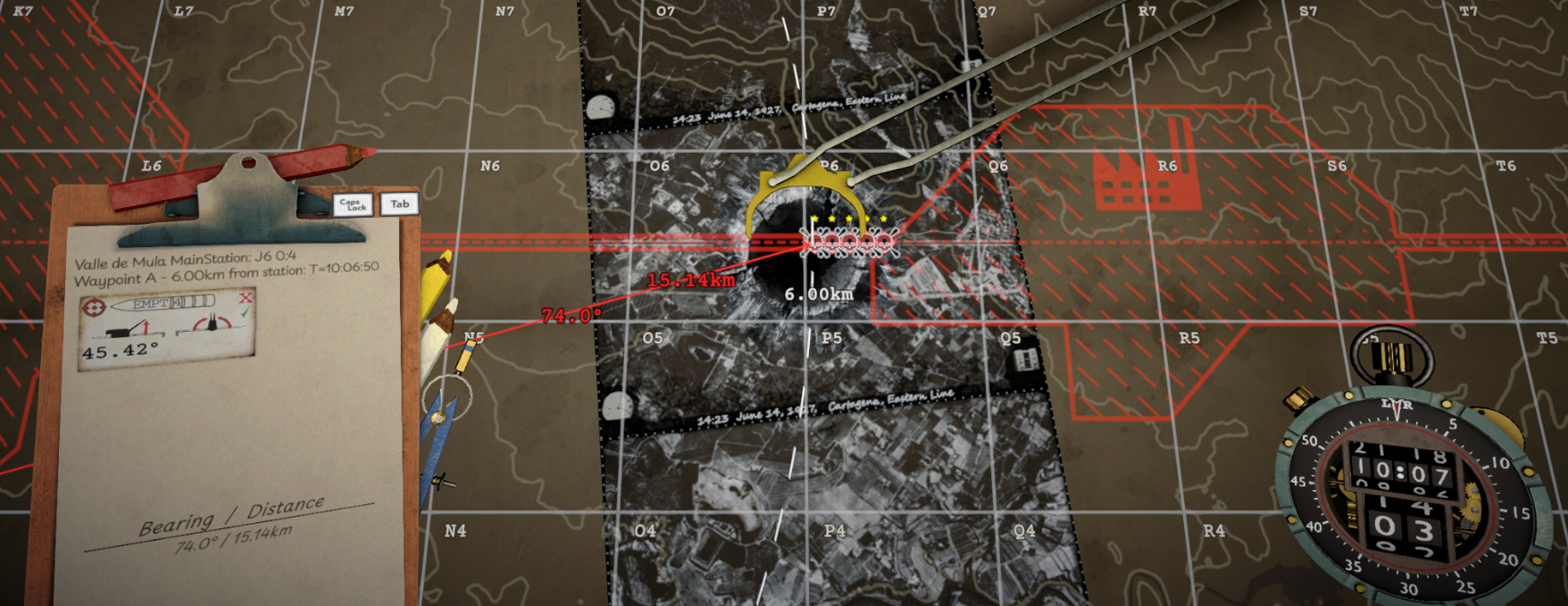
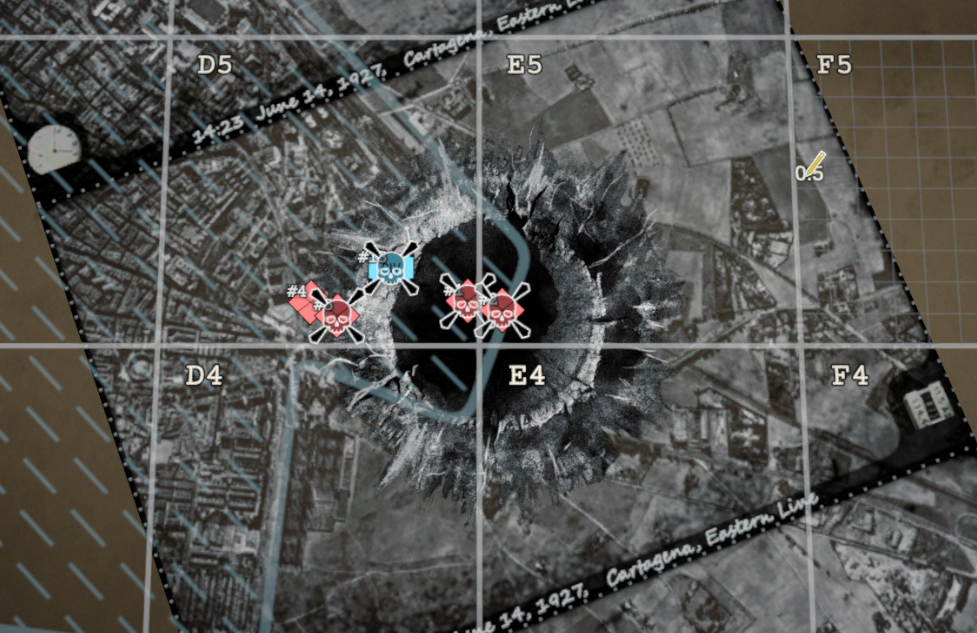
The next mission, “Siege of Cartagena,” is similarly stressful. Players must guess the position of concealed batteries by firing ranging shots and referencing spotters before the batteries destroy the Iron Nest. As the campaign continues, you acclimate to time constraints and learn how to be as efficient as possible. The process of getting fast adds a second layer of fun to the game above the “Fisher Price” baseline, and for the second half of the campaign, the missions test you. I found this change to be genuinely fun, though I think the game could’ve been a little harder.
But aside from the main attraction, the game features a set of records which can be played on the Nest’s in-house speakers. Each track is an over-the-top, dramatic and patriotic march in an authoritarian style. I was reminded of North Korean propaganda music when listening. There is also a fun coffee machine minigame near the player’s bed and a customizable cat which wanders around and can be picked up.
Overall, I found Iron Nest to be an incredible game for an artillery simulator. If you want a more expansive or in-depth narrative, I wouldn’t recommend it, but the game has great visuals, amazing sound design and a fun core loop all centered on the two immense cannons. There is a free demo on Steam, and the full game is $20, which I think is a solid price for what you get.