Minor spoilers regarding the first hour of gameplay.
“But monsters are bad? Aren’t they?”
Choose your response:
- “Maybe they aren’t all the same.”
- “He’s just scared we’ll revolt.”
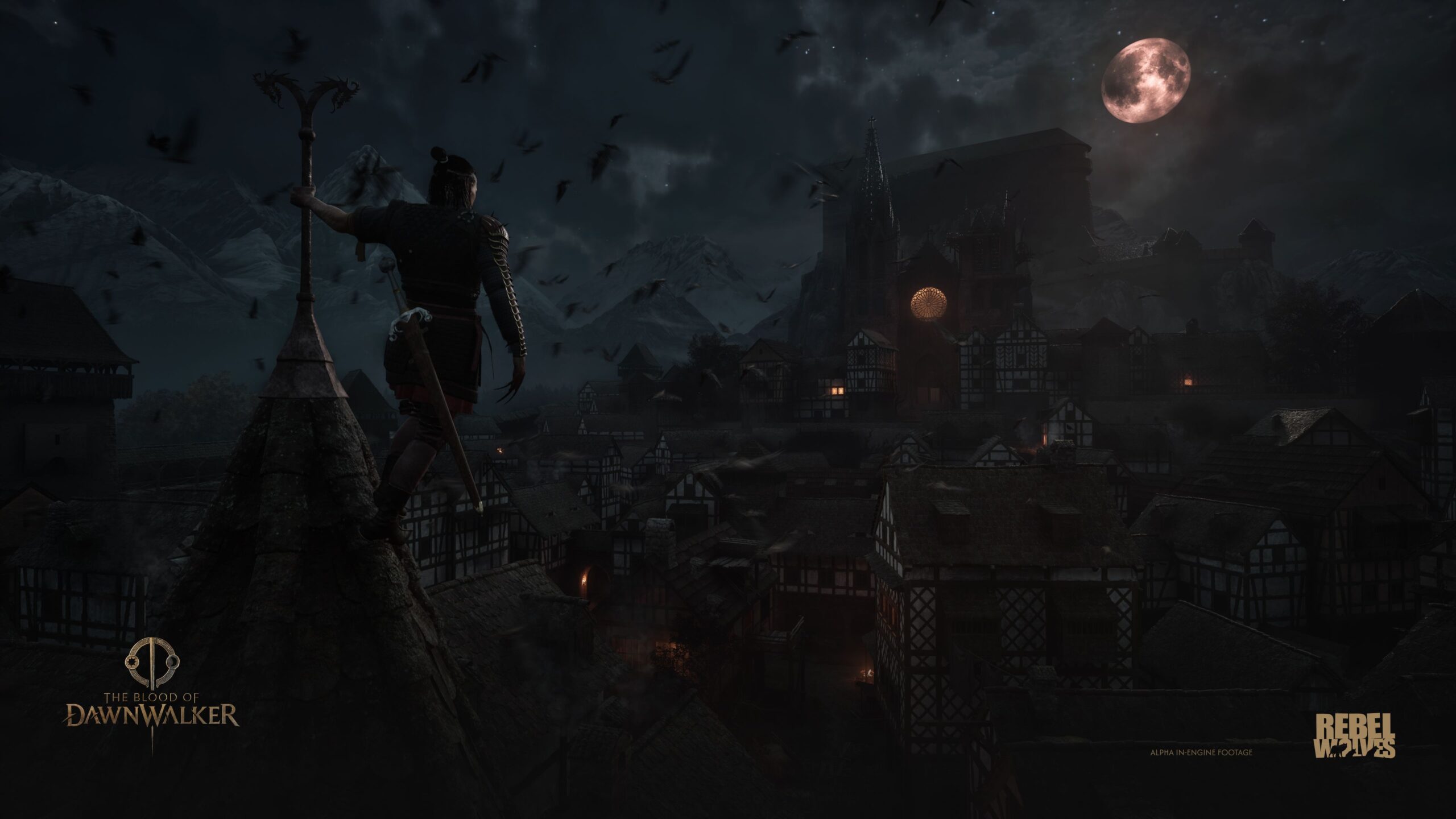
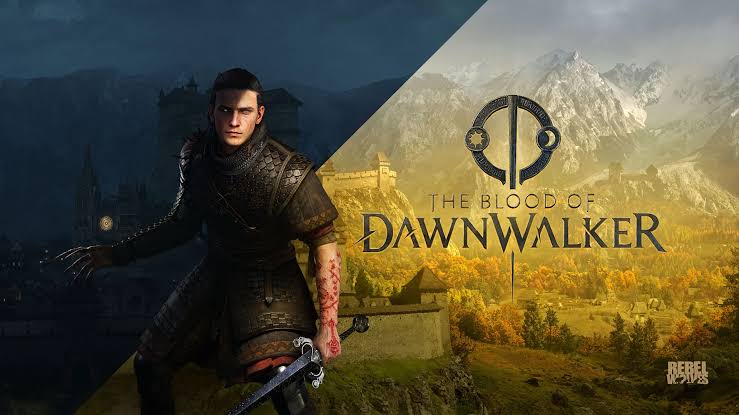
Blood of the Dawnwalker is a single-player action RPG in a dark fantasy 14th-Century setting. You play as Coen, a young adult introduced as a family-oriented and hardworking peasant who spends his days trying to help his father support his three other siblings and their severely mentally ill mother. Every full moon, the adults are mandated to go to mass and tribute their blood to the vampire overlords. But how can you convince a woman so afraid to make a sacrifice like that, knowing she’ll be punished by death if she doesn’t? That’s the initial question our main character is faced with at the start of the game, which is labeled a prologue.
In fact, the first three hours of the game are considered a prologue, which is not only unusual, but it also follows unconventional storytelling methods. As a Professional Writing student who is interested in narrative storytelling, I have a list of things you might not want to start your story with. This game starts with two different no-nos right away.
1. Starting in the middle of action.
When telling a story, you want the audience to care for the characters before something happens to them. Being in the middle of an action scene with characters you’ve grown attached to for the last hour, versus ones you haven’t even met yet, will evoke two different emotions. Advice given to writers is to allow your characters time to become familiar before you throw them in a fight. That way, the readers, viewers or players can have more stake in the battle itself.
As soon as you start the game, the opening cinematic begins, showing Coen running away with his visibly plague-ridden younger sister in his arms. They get caught in a broken-down church by the King and his soldiers, who are instructed to kill anyone with signs of illness to stop it from spreading. As this encounter is happening, vrakhiri [the vampires] attack the King, all while Coen begs for his and his sister’s lives. The main vrakhiri, Brancis, cures his sister by having her drink his blood. He states that things will be different now, claiming that he’s in charge now.
Everything that happens in the cinematic is interesting and jarring. The graphics are hyper-realistic, and the vibe of the entire opening is gothic and dark. It’s truly haunting, and even though it starts with a writing sin, it was engaging and left me excited to play.
And then it transitioned to the next way you should not start a story.
2. A dream sequence.
Following the events that were shown in the opening cinematic sequence, the player will have a lot of questions. What happened to the sister? Is she a vrakhiri now, and if not, how did the blood she drank cure her?
Instead of providing the player a path to answer these questions, a confusing and borderline incoherent dream sequence follows the intro. The player is not made aware of it being a dream, and it only leaves you with more questions. How much time has passed since the opening cinematic? Who are these people that Coen’s around?
The dream sequence functions as a tutorial. It allows the player to learn how to fight and use vampiric powers (before he’s a vrakhiri in the plot), which is fine, but the way it’s presented feels jarring, and it was frustrating when it’s revealed as a dream. The dialogue during this sequence was amateurish, and it quickly made me worried that it would be reflected throughout the RPG.
Then he woke up.
And quickly I was relieved to see that my developing fears were all because of the weird dream state the development team decided to start the game off with. The dialogue was witty, relevant to the time period, and intelligent. Not to mention the cleverly placed ticking time clock they set by having the mass be at the end of the first day.
But was the game starting off with two storytelling blunders a sign of it continuing to drop the ball?
No.
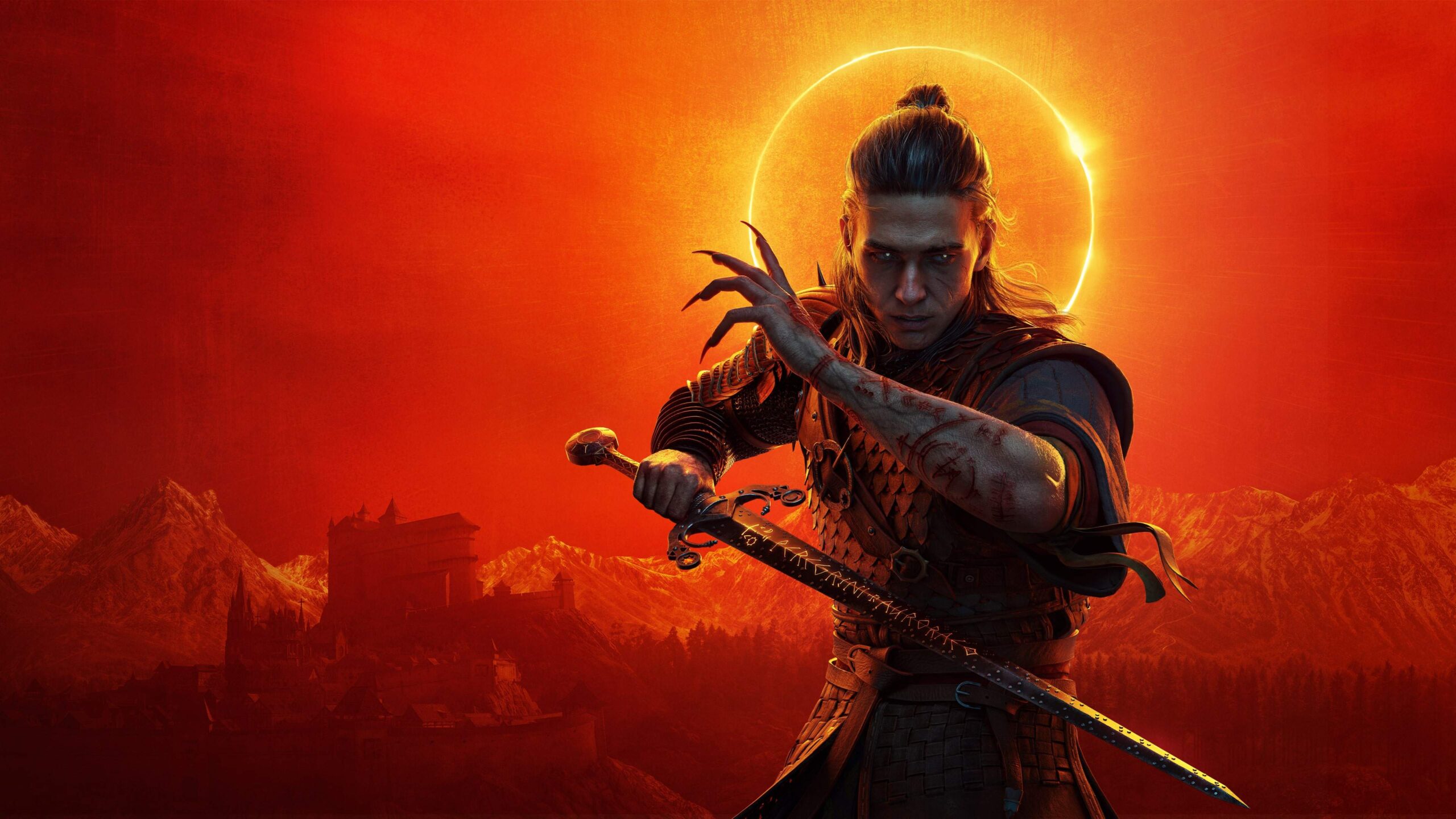
I think what it more accurately showed is that Blood of the Dawnwalker isn’t afraid to take risks. I am currently over halfway through the in-game timer until the final battle, and all I’ve seen is this RPG pushing the envelope.
After the prologue, Coen is turned into a Dawnwalker. Someone who is a human by day and a vampire by night. The game’s main mechanic is how it handles time. You have thirty days to save your family, but besides that, the world is completely open to the player. The player decides which quests to pursue and how to spend their time, and you have to choose wisely because you might not have the time allotted to do everything you want.
Coen has different skills, talents, and missions depending on the time of day. Several things that might seem unimportant actually have a huge impact on him and the world around him. This game is a true RPG, and the development team, Rebel Wolves, clearly put a lot of love into it.
The team is composed of several veteran developers, many of them being ex-CD Projekt Red staff. Konrad Tomaszkiewicz, the game director, was the former director of The Witcher 3: Wild Hunt. Their influence on the previous franchise is seen here. The dialogue functions similarly, and it provides a possibly too familiar, but enjoyable gameplay loop nonetheless.
For those who love open worlds and the supernatural shown in a gritty light, this is a game you should consider picking up. Being able to see how your choices impact the game makes it feel alive, perhaps even more so than our main character. I’m looking forward to finishing the game and seeing which of many endings I could get!